
To ask how AI is used in the ninth art (as well as in the other eight) is to ask what artistic creation is, and what makes it uniquely human. Is AI a tool like a spelling and grammar checker, albeit one with several orders of magnitude more advisory power, or can it produce something genuinely novel? How can it use line, language, or both to create representations that resonate with deep feelings and universal truths? After all, isn't AI intrinsically human, in the sense that its knowledge and abilities are fed by the vast sum of works and creations our species has produced?
Is creation a matter of recombination?
All art is shaped by influences, and their unique arrangement can produce something profound and new. Pure originality—something that appears with virtually no traceable lineage—is extraordinarily rare, if not stricto sensu impossible. In music, when The Velvet Underground released Venus in Furs on their first album in 1967, its sound, atmosphere, and lyrics were radically new. Yet, taken individually, they did not come from nowhere: literature, ancient melodic structures, and the avant-garde experiments of the 1960s all leave their mark. What is truly new is the arrangement.
Really? When filmmaker Gus Van Sant made Psycho in 1999, a shot-for-shot remake of Alfred Hitchcock's 1960 film, what was his artistic gesture? Modernizing an older work to make it more accessible? Not only that: he introduced subtle variations in order to « magnify » it, as he later explained—though magnifying does not mean improving. Is this kind of variation on the same theme creation? It is debatable. And if it is not, is it art? Well, yes, probably. But then: is art only about creating something new?
AI takes this idea of recombination to a higher level, speeding up trial and error and making experimentation easier. Of course, it can also be seen as a purely mechanical process, devoid of originality, unpredictability, or the very flaws that can give an artistic proposition its flavor: a regurgitation without a point of view, unlike Van Sant's approach.
Complex flows and transitions
But let's return to comics, where not only the image, framing, and words matter, but also the way the reader's eye moves across the page. Comics are a matter of flow and transitions—an aspect explored extensively in Scott McCloud's 1993 book Understanding Comics. AI can certainly create flows and transitions. But to what extent can it handle the last of the six types of transition McCloud identifies: the non sequitur transition, characterized by no apparent logical connection between images?
And what about spatio-topia, which Thierry Groensteen defines in The System of Comics (1999) as the geometric arrangement of panels on a page? To what extent can AI master it as well as a human and use it to create visual narratives? We are not claiming it cannot; we are raising the question. In any case, after struggling with this aspect, AI seems to be getting better at « understanding » comics. A 2025 study1 seeks to assess « the extent to which a deep-learning process can create a narrative from a comics sequence » and concludes that « the results are promising ».
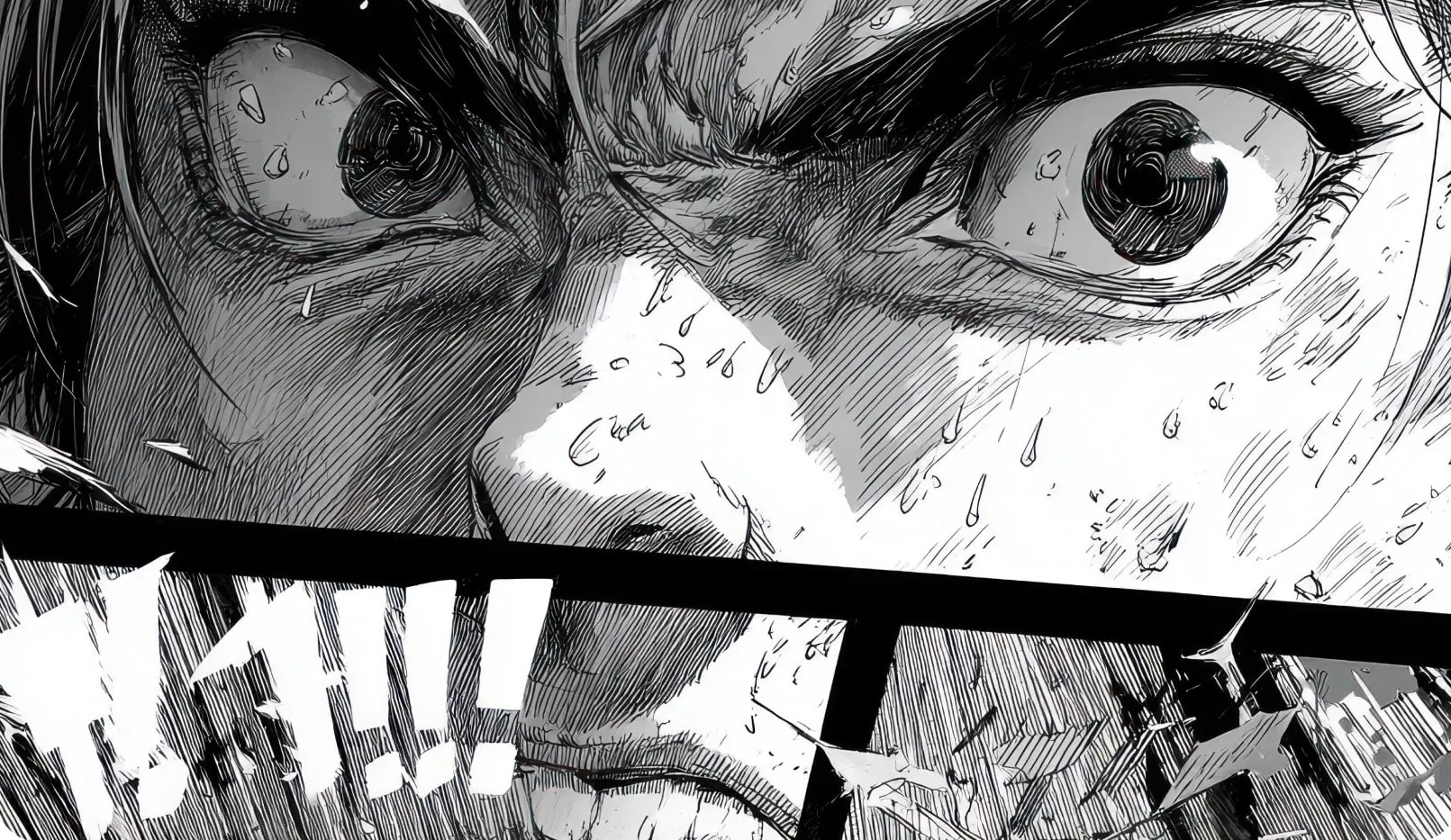
At the same time, with a little effort, AI can unquestionably produce not only aesthetically sophisticated images but also brilliant page layouts. It would not be unreasonable to use it for naturalistic drawing while keeping humans in creative control of the sequencing. We may be more cautious, however, about symbolic, abstract drawing such as cartooning.
Would it also be unreasonable to consider AI for lettering or inking? Comics certainly involve a great deal of work, some of it « mechanical » and therefore potentially automatable. The question, then, is where to draw the line between mechanical tasks and creative contribution.
Ultimately, answering these questions means agreeing on what matters most: the idea, its representation, the medium, or some combination of all three. This applies to every art form, from literature and music to animation. And, in a way, the debate makes the distinctive nature of comics as « sequential art » even clearer.
◆