
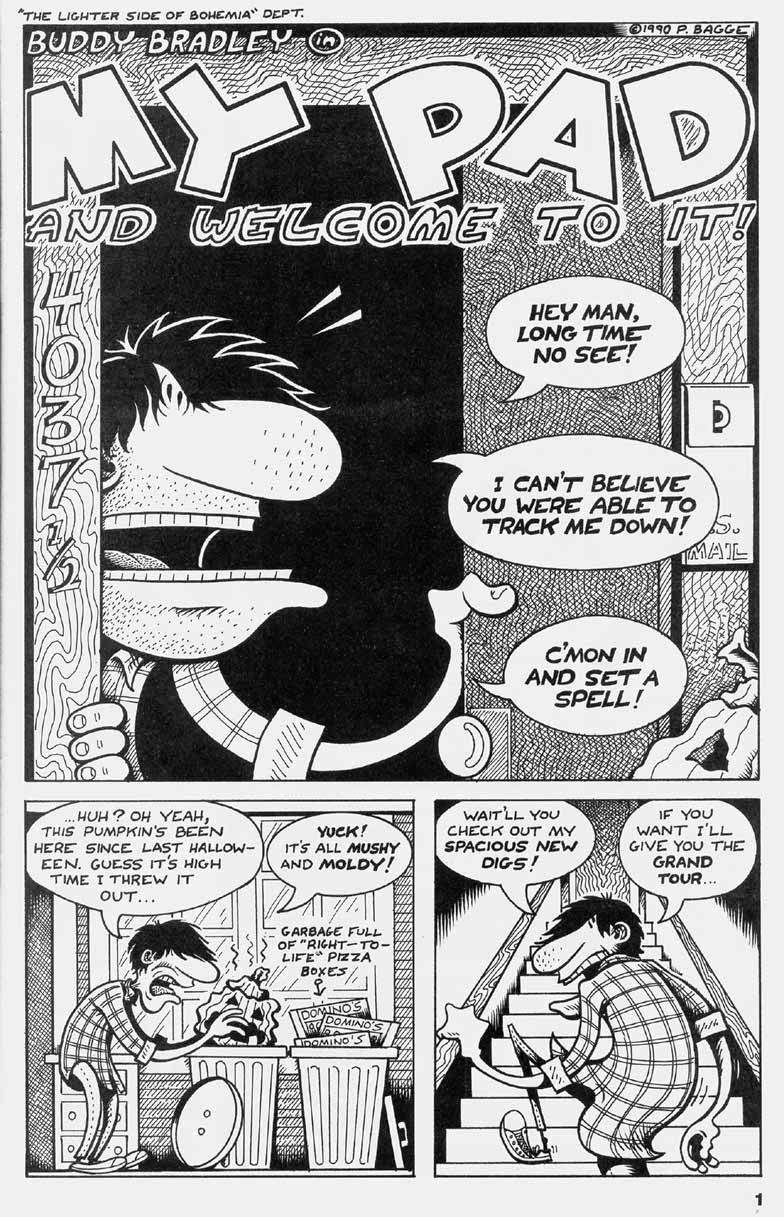
When Peter Bagge began the series Hate in 1990, he already had ten years of work behind him. After publishing a few strips in the East Village Eye, he contributed to Weirdo, Robert Crumb's anthology, then launched Neat Stuff with Fantagraphics in 1985. It introduced the main characters who would later appear in Hate: the Bradley family.
Neat Stuff ended in 1989. The following year, Hate debuted in black and white, with Bagge handling every aspect of its production (writing, drawing, inking, and lettering). Starting with issue #16, he introduced color and teamed up with Jim Blanchard for the inking. After 30 issues, Hate ceased publication in its regular format in 1998, though new material has appeared sporadically in the Hate Annual in the United States since February 20011.
What is Hate about? Magnificent (more or less) losers. Misfits and screw-ups from a hidden, backwater America, caught between the decay of the family unit and the cry of revolt from those left behind by the American Dream. Twisted family stories. Yet Bagge looks kindly on these characters, however mediocre they may be, and never lapses into contempt. To some extent, Buddy Bradley—whose story unfolds over roughly a decade, from the end of adolescence to starting a family—is autobiographical.
Relatable characters
Set partly in Seattle, the birthplace of the grunge movement in the early 1990s, Hate also gives Peter Bagge a chance to depict the music scene of the time. Later, Buddy and his girlfriend Lisa move to New Jersey, facing more prosaic problems and the boredom of suburban life: endless hours of television, apocalyptic barbecues, and prolonged failures to communicate. But the early issues of Hate struck a chord with young readers, who partly identified with the archetypes Bagge created, and the comic became a minor cultural phenomenon.
Buddy, the Bradleys' eldest son, embodies the antihero: ugly, poorly educated, hot-tempered, selfish, and fond of drink, he is a slacker. Buddy has no plans for the future and would rather listen to his favorite music from the comfort of his armchair (no live music, thank you!) while drinking bottled beer. If he takes on a job or business venture, it's mainly out of necessity or at the urging of his friends. With Jay « the junkie », for instance, he opens a shop selling collectibles and vintage items, fully intending to cash in on his collector customers' nostalgia. But at first, he is always reluctant.
Unsurprisingly, Buddy is lazy, a poor listener (especially with his girlfriends), and deeply disillusioned. The title Hate reflects the general resentment that makes Buddy a quintessential « Generation X » character, in the vein of Douglas Coupland. As a teenager, Buddy initially defines himself in opposition to his disintegrating family: a slumped, boorish father, an excessively pious mother, and hellish siblings. But his personality and his view of the world grow more complex over the course of the series.
Peter Bagge later said: « I started doing Hate, and when the first issue of Hate came out, there was no such thing as the phrase slacker, Generation X, grunge music. Those words didn't exist, and then, a year later, everyone was talking about it in the mainstream media. They were all talking about it.. »2
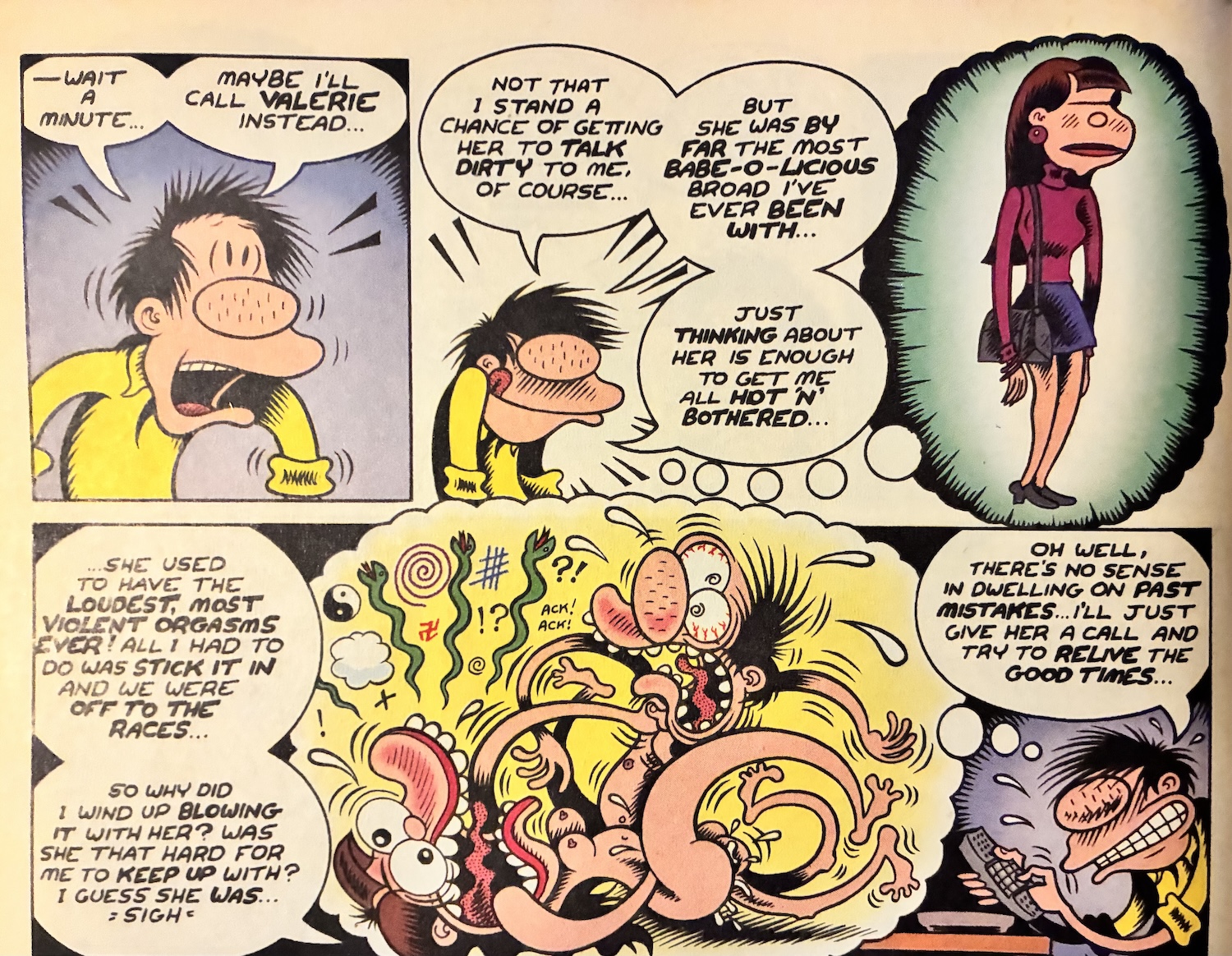
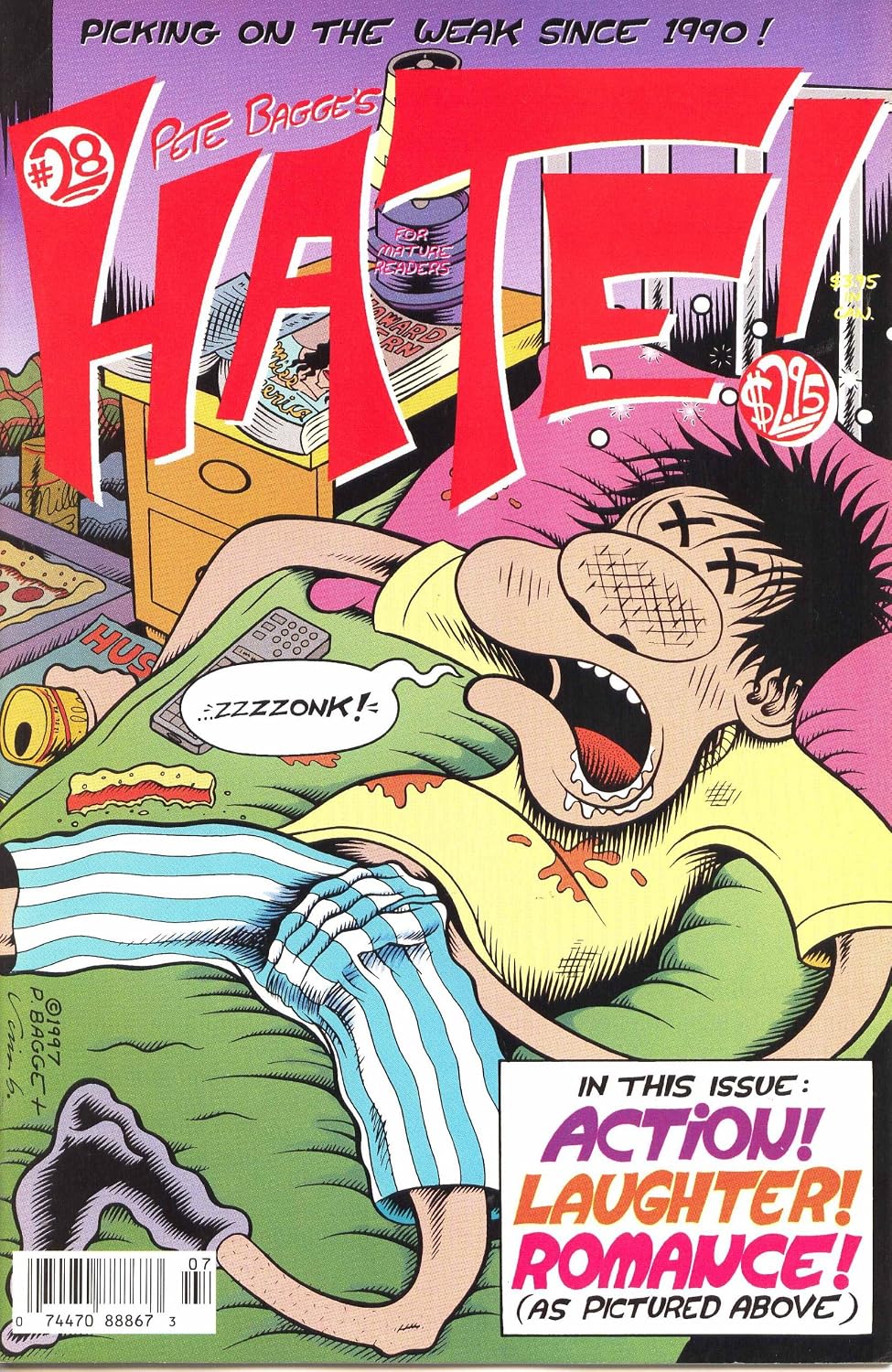
Beneath Bagge's hyper-expressive, even outrageous artwork—with its elongated bodies, exaggerated expressions, and oversized faces—Hate tackles weighty subjects, including old age, sudden death, depression, suicide, and the loneliness of « misfits ». The comic remains rooted in everyday life without losing its humor or satirical bite, but its approach becomes more empathetic and nuanced than in the earliest issues. As the story progresses, the scenes grow increasingly tense, and humor continues to rub shoulders with an undercurrent of gravity.
The characters' vocabulary is a particular delight: a catalog of hilarious American slang.
A political perspective
Hate avoids reducing everything to politics or social issues. It strikes the right distance, without any particular desire to deliver a message. But its tone is not neutral: Buddy Bradley's adventures express the perspective of an author observing society.
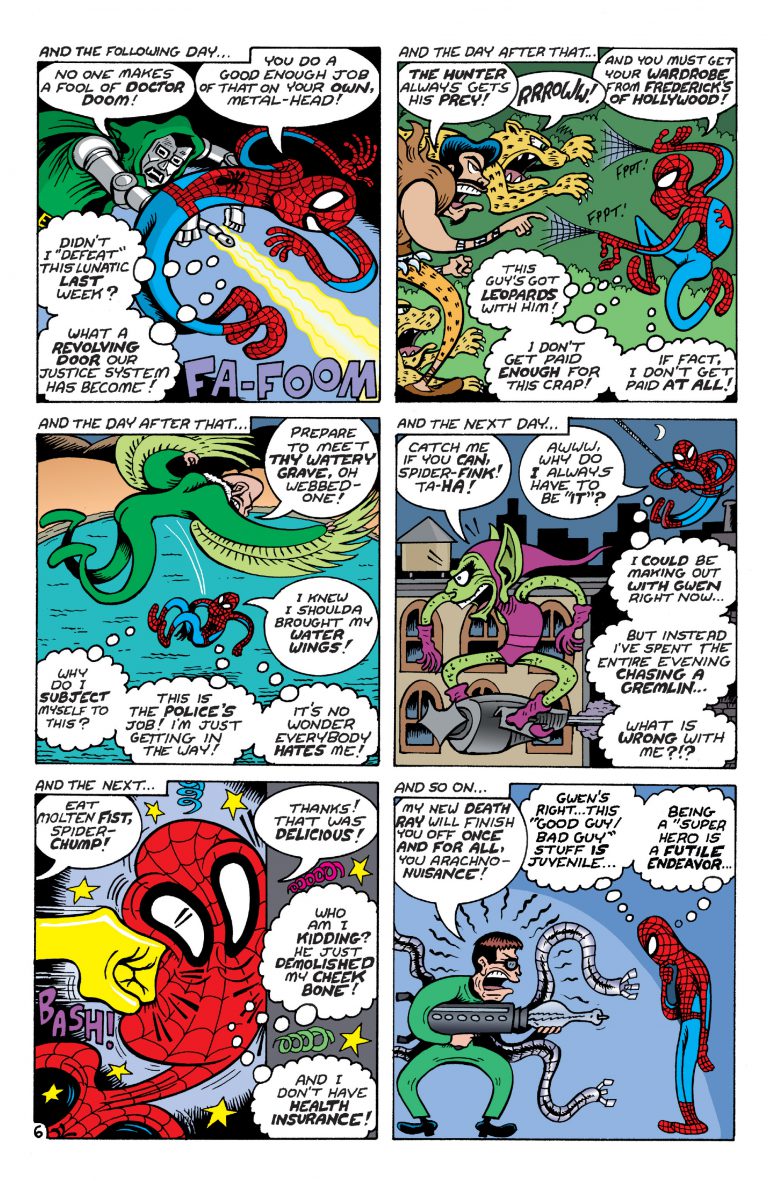
In the 2000s and 2010s, Peter Bagge turned to journalism and politics, producing biographies of outspoken women writers (Fire!!: The Zora Neale Hurston Story) and activists (Woman Rebel: The Margaret Sanger Story) for Drawn & Quarterly. He continued his parodic work with The Megalomaniacal Spider-Man and The Incorrigible Hulk for Marvel Comics. He also contributes to the libertarian magazine Reason3. Fantagraphics published his « cartoon journalism » anthology, Everyone is Stupid Except Me (And Other Astute Observations).
Like many great comics creators, Peter Bagge—also an exceptional visual artist—puts storytelling first and is wary of drawing for its own sake. In 2013, he told Gary Groth in The Comics Journal4: « [Cartoonists] asking us to marvel at their own turds. But they’re denying this very important fact, that what is just as important (...) is telling a story, expressing a concise thought or worldview. And that if you sit down and work out the whole goddamned story before you start to do the finished art on it, it will be better. It will be a better story. Duh. That’s what novelists do, that’s what screenplay writers do. »
◆