
Rodolphe Töpffer is often considered the father of the modern comic. In the mid-nineteenth century, this Swiss artist systematized the use of framed panels and the combination of words and images (sequential images depicting a scene, by contrast, have a history spanning millennia). The comic strip later flourished in the United States, with R. F. Outcault's The Yellow Kid from 1896, Winsor McCay's Little Nemo in Slumberland and Dreams of a Rarebit Fiend, and George Herriman's Krazy Kat.
Among these pioneers, Winsor McCay stands out: his comics display truly astonishing narrative techniques. Both his visual style and page layouts are strikingly innovative, and can still surprise readers today, especially those familiar only with more conventional comics.
The spirit of the rules
On June 2, 1940, The Spirit made its debut in the Chicago Tribune. Its creator, Will Eisner, developed many of the storytelling and paneling techniques that are now commonplace in Western comics. The apparent simplicity of these stories, rooted in the popular pulp fiction of the day and seasoned with the masked-hero formula of Batman (1939), as well as Eisner's « caricatural » drawing style (in the best sense of the word), conceal great formal inventiveness and biting irony. As early as 1940, Eisner told the Baltimore Sun that he believed comics deserved to be considered an art and literary form in their own right.
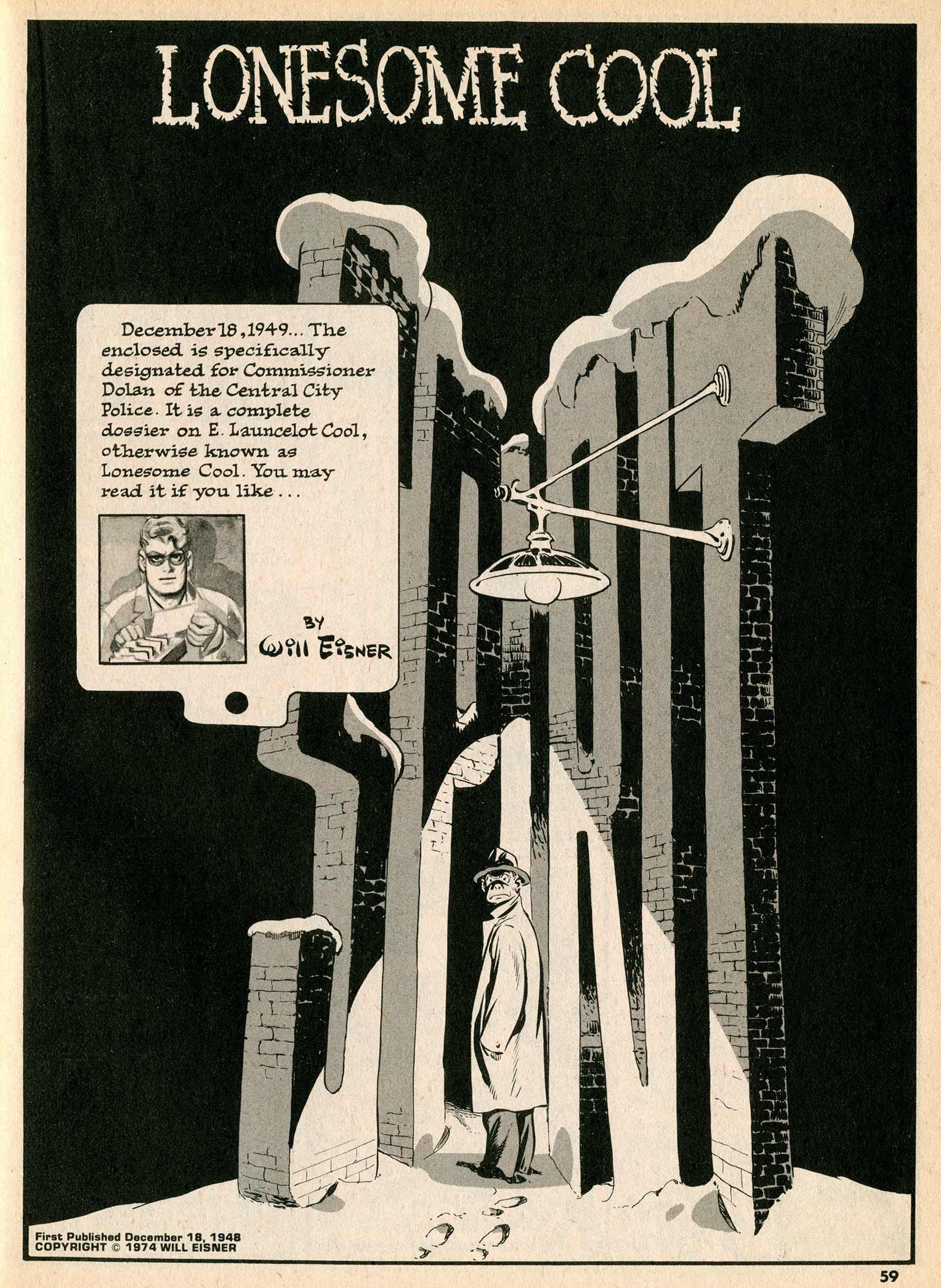
It is no coincidence that, much later, in 1978, Eisner created A Contract with God, one of the first graphic novels. Until then, with the exception of Japanese comics, the medium had mostly been published as newspaper strips, comic books, or short albums.
Manga genesis
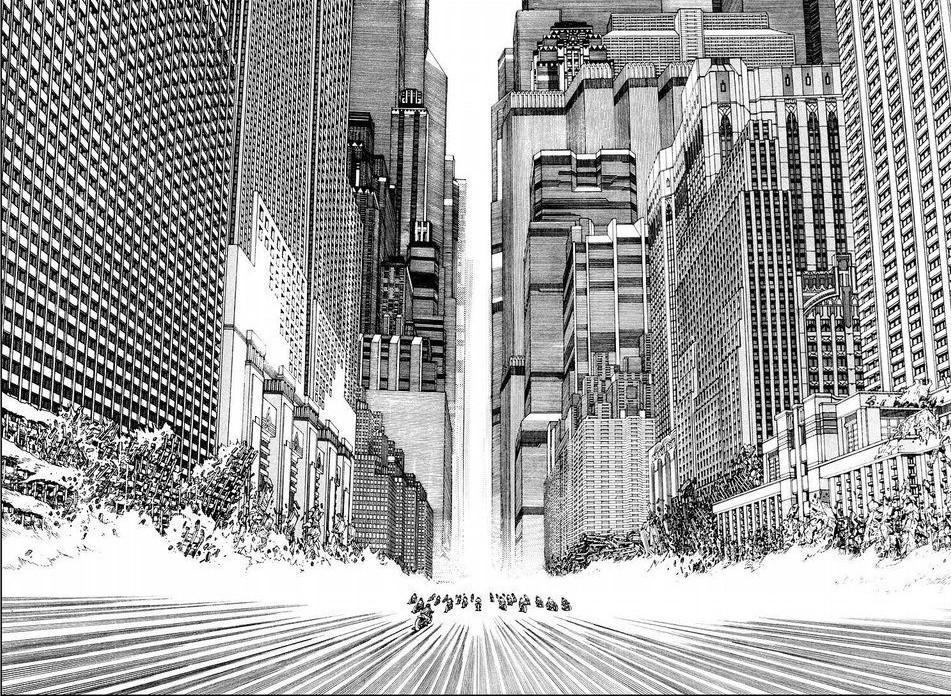
Meanwhile, in the mid-1930s, Japanese comics were aimed overwhelmingly at young readers. It was not until the 1950s that Osamu Tezuka (New Treasure Island, Lost World) emerged, followed by creators such as Keiji Nakazawa (Barefoot Gen), Katsuhiro Ōtomo (Akira), Goseki Kojima (Lone Wolf and Cub), and Takao Saito (Golgo 13). They helped broaden manga's readership, as its enormous popularity in Japan today attests.
Because manga developed relatively independently from European and American comics, Japan's cultural specificities helped give rise to techniques rarely seen in Western comics. These include the panel transitions Scott McCloud calls « aspect-to-aspect » in Understanding Comics—moving « from one aspect to another » of a subject, an emotion, and so on—as well as « subjective movement », which places the reader in the equivalent of a point-of-view camera.
Big changes
In the United States, after A Contract with God, experimentation exploded in the 1980s, including in superhero comics (David Mazzucchelli, Alan Moore, Bill Sienkiewicz, and others). Take Sienkiewicz: he began by drawing mainstream comics such as Fantastic Four and Moon Knight, in a style close to that of Neal Adams, whom he admired.
Before long, he freed his collage technique and use of color, putting them in the service of a masterful command of space in Marvel Comics' The New Mutants and Epic Comics' Elektra: Assassin. His style unsettles, even divides. Like other creators on a similar path (Rick Veitch comes to mind, though their visual worlds are quite different), he is unafraid to challenge readers with aesthetic surprises while retaining a degree of narrative accessibility.
In the 1988 Cahiers de la Bande Dessinée, Thierry Smolderen wrote: « Sienkiewicz (...) is one of the few artists able to distort characters until they become entirely caricatural, without the story losing any dramatic or realistic force. In fact, Sienkiewicz's caricatures are more convincing than many frankly realistic images. »
In 1988, Sienkiewicz began Big Numbers with Alan Moore. The project was abandoned after only two issues, but he created magnificent pages that never lose sight of the fact that they are comics, not illustrations. His approach has roots in cartooning, particularly in its distortion of shapes and proportions. The work sits between comics and contemporary art. It emerged amid a wave of experimental comics that did not always find an audience, and Big Numbers is one of its archetypal examples.
The 1980s in the United States also saw the development of works that moved decisively beyond the classic themes of comics, such as the Hernandez brothers' landmark series Love & Rockets, and the work of Art Spiegelman and others (Gary Panter, Charles Burns, Joost Swarte, Françoise Mouly...) around the magazine Raw.
Alternative currents
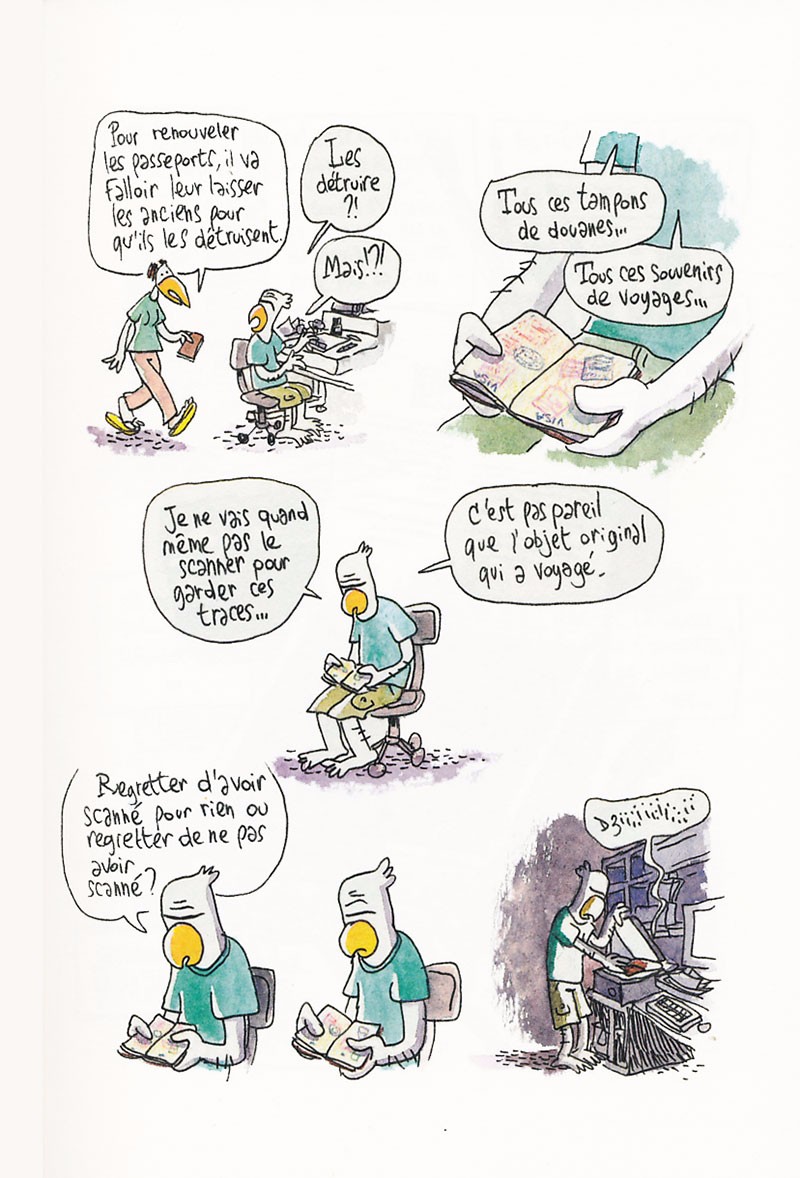
In France and Belgium, several « alternative » publishers—Futuropolis, Cornélius, and L'Association (founded in 1990 and bringing together creators such as Jean-Christophe Menu, Lewis Trondheim, David B., and Patrice Killoffer...)—embodied the emergence of an exploratory comics scene, freer in its length, themes, and styles. This alternative status did not prevent creators from reaching a wider audience (Art Spiegelman and Lewis Trondheim, to name just two).
Nor does « alternative » mean « underground » in the sense of the late-1960s counterculture, represented in American comics by creators such as Robert Crumb and Gilbert Shelton. Since 2003, the Angoulême International Comics Festival has distinguished between these two strands.
On the (web ?) page?
Technology also contributes to innovation in comics. It is of course a means of production, but also a vehicle for experimentation: on screen, creators are no longer limited by the traditional page format. The « infinite canvas », for example, is explored by webcomics such as Saturday Morning Breakfast Cereal (SMBC).
Another form born in the digital era is the webtoon, a comic designed for vertical scrolling, particularly on phones. Popularized in South Korea before spreading internationally, this format reorganizes storytelling around the act of scrolling, using spacing, rhythm, and the gradual appearance of images.
These new uses extend the question underlying most formal experiments in comics: how does form guide the eye and shape the story? It should also be clear that graphic storytelling has proved capable of telling highly complex and deeply realistic stories—including socially grounded ones—by breaking free of format constraints. Comics have not finished thinking out of the box (or more accurately comic panel).
◆